
How 3D Scientific Illustration Helps Explain Complex Concepts
Scientific information is becoming increasingly complex — molecular interactions, cellular processes, medical mechanisms, and structural systems often involve dimensions and dynamics that are difficult to grasp in traditional 2D diagrams.
This is where 3D scientific illustration becomes invaluable. It transforms abstract concepts into intuitive visuals that researchers, clinicians, students, and stakeholders can understand instantly.
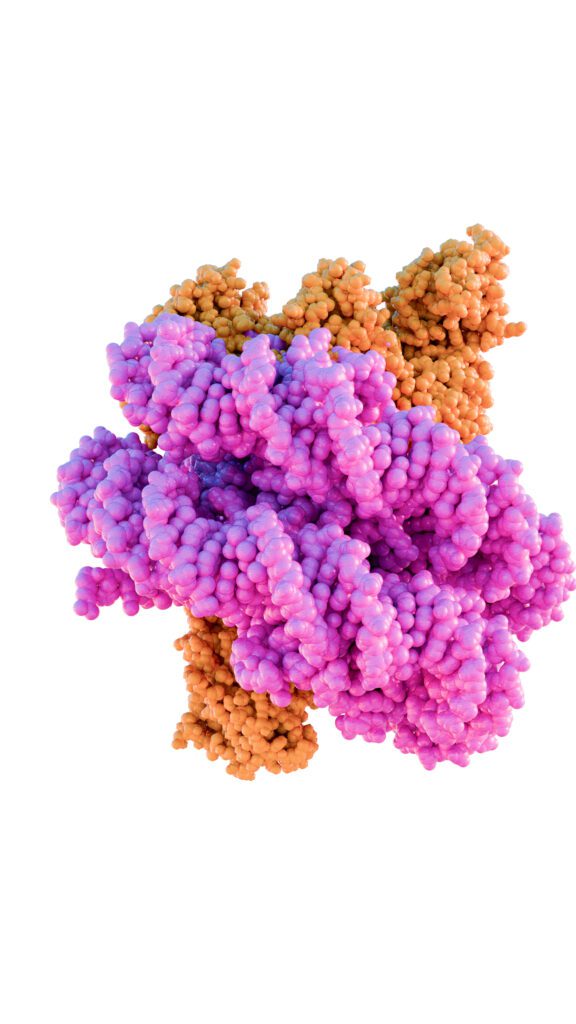
In this article, we explore why 3D scientific artwork is so effective, how it enhances communication, and why more scientific teams rely on 3D visuals for projects ranging from journal covers to investor presentations.
Why 2D Diagrams Are Sometimes Not Enough
2D illustrations are excellent for clarity, simplicity, and clean communication. However, certain concepts are inherently three-dimensional and cannot be accurately represented on a flat plane without losing essential meaning.
Examples include:
- protein–protein interactions
- spatial organization inside cells
- molecular docking
- organelle architecture
- medical device mechanisms
- anatomical orientation
- drug delivery pathways
- tissue microstructure
- biomechanical motion
Flattening these into 2D can result in ambiguous or oversimplified information.
Why 3D Scientific Illustration Works So Well
1. It Makes Complex Structures Intuitive
3D visuals allow viewers to understand:
- depth
- orientation
- shape
- scale
- spatial relationships
For example, the twist of DNA, the fold of a protein, or the geometry of a receptor–ligand interaction are instantly clearer in a 3D environment.
2. It Reveals Hidden or Internal Details
3D artwork can show:
- cross-sections
- cutaway views
- exploded parts
- internal components
- motion sequences
This is essential in anatomy, medical devices, and mechanistic illustrations.
3. It Supports Better Decision-Making
Clear visuals help:
- labs present findings to committees
- biotech teams pitch technology to investors
- educators teach complex topics
- clinicians explain treatments to patients
3D visuals simplify communication across diverse audiences.
4. It Enables Cinematic Storytelling
Unlike 2D graphics, 3D illustrations can:
- include lighting and depth
- show dynamic motion
- highlight focal areas
- use atmospheric effects
This makes them ideal for journal covers, grant proposals, and public-facing materials.
Applications of 3D Scientific Illustration
1. Journal Cover Art
3D renders are often selected for covers because they:
- look modern and polished
- highlight complex mechanisms
- allow dramatic lighting and composition
- stand out from traditional 2D diagrams
Many high-impact journals prefer cover images with dimensional depth.
2. Biomedical and Cellular Visualization
3D tools are perfect for showing:
- cellular environments
- organelles
- molecular clusters
- tissue layers
- microenvironments
- immune interactions
These visuals help researchers and students understand biological spaces more accurately.
3. Medical Device and Engineering Illustration
3D models can show:
- device mechanisms
- assembly and disassembly
- internal parts
- usage demonstrations
- biological interactions
They are widely used in:
- surgical device marketing
- training material
- mechanical design presentations
4. Drug Mechanism of Action (MoA)
3D illustration is ideal for explaining:
- target binding
- activation or inhibition pathways
- nanoparticle delivery
- pharmacokinetics
- receptor interaction sequences
These mechanisms are extremely hard to visualize in 2D.
5. Educational Content and E-Learning
Students understand concepts faster when they see them in 3D:
- anatomy
- physiology
- molecular biology
- neuroscience
- microbiology
3D visuals are now common in online courses, textbooks, and interactive platforms.
How 3D Illustrations Are Created
Professional 3D scientific illustration follows a structured workflow.
Step 1 — Research and Data Gathering
This includes:
- structural biology data
- microscopy images
- scientific papers
- model references
- sketches from the lab
The goal is to build a scientifically accurate foundation.
Step 2 — 3D Modeling
Depending on the subject, the model may be:
- sculpted (cells, organelles, soft tissues)
- modeled geometrically (devices, receptors)
- imported from scientific databases (proteins, compounds)
Step 3 — Texturing and Shading
Scientific textures are applied to:
- cell surfaces
- membranes
- proteins
- environmental backgrounds
These textures help convey realism.
Step 4 — Cinematic Lighting
Lighting determines how readers perceive:
- depth
- material
- location of elements
- focal points
Soft rim lighting and volumetric effects are commonly used.
Step 5 — Rendering and Post-Processing
Final render passes include:
- ambient occlusion
- color grading
- subtle bloom
- edge clarity
- contrast balancing
This ensures the image meets journal or presentation standards.
Benefits of Using 3D Illustration in Research Communication
✔ Faster comprehension
People understand 3D structures more naturally.
✔ Stronger visual storytelling
Ideal for presentations, covers, and pitch decks.
✔ Increased engagement
Well-rendered visuals attract and hold attention.
✔ Scientific accuracy
3D maintains spatial relationships faithfully.
✔ Customizability
Models can be reused for additional visuals, animations, or figures.
Common Mistakes in 3D Scientific Visualization
❌ Overly complex scenes
Too much detail reduces clarity.
❌ Unrealistic biology
3D must be guided by real scientific reference.
❌ Poor lighting and shading
This can make visuals look flat or amateurish.
❌ Incorrect proportions
Biological scale must be respected.
❌ Cluttered composition
Focal points must be clear.
A professional illustrator avoids these pitfalls and delivers publish-ready artwork.
Why Researchers Hire 3D Scientific Illustrators
Researchers often reach out for:
- journal cover designs
- conference presentations
- graphical abstracts
- grant proposals
- educational graphics
- website visuals for labs
- mechanism of action explanations
- molecular storytelling
Professional visuals significantly improve communication effectiveness.
Need 3D Scientific Illustration for Your Project?
If you need to clarify a complex idea, visualize a mechanism, or create a high-impact image for publication, I can help create accurate, cinematic 3D illustrations tailored to your research.
Send your sketches, data, or molecular models, and I will turn them into a publication-ready visual.