
Scientific 3D model creation: How Scientific 3D Models Are Created: From Concept to Publication-Ready Visuals
Scientific 3D modeling is becoming an essential part of modern research communication.
Whether you need a cinematic journal cover, a clear mechanism diagram, a molecular interaction scene, or a visual for a conference poster, 3D models make complex concepts easy to understand.
Yet many researchers don’t know what goes into the creation of scientific 3D models — or how professionals translate scientific data into visually accurate, publication-ready visuals.
This guide explains the entire process step-by-step, from concept to final rendering.
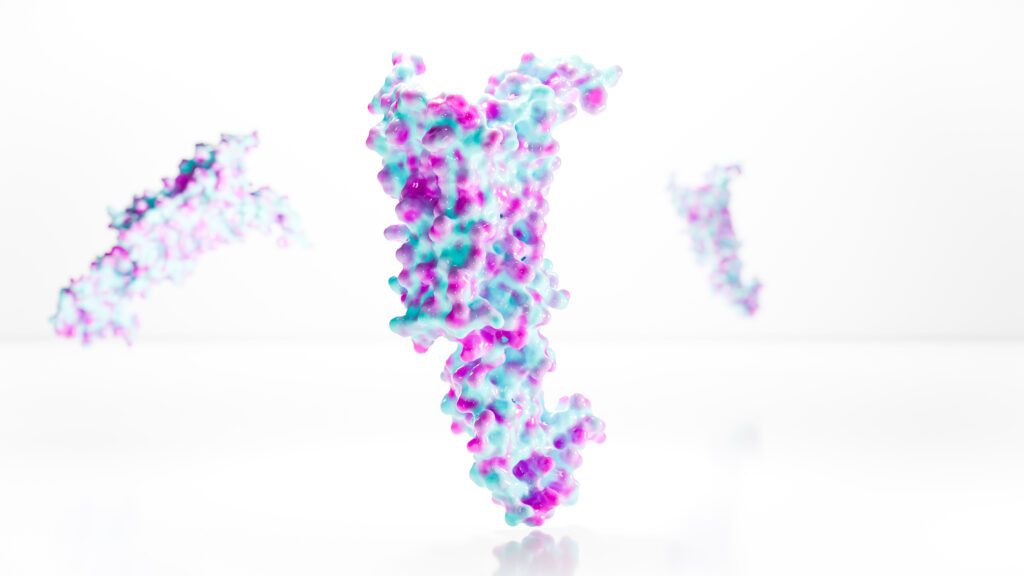
Why 3D Scientific Models Are So Effective
3D illustration excels where 2D diagrams fall short:
- it shows depth and orientation
- it reveals hidden structures
- it clarifies spatial relationships
- it allows cinematic storytelling
- it aids comprehension of complex mechanisms
- it produces high-impact visuals for journals and presentations
3D models allow researchers to communicate science clearly and beautifully.
1. Understanding the Science (The Foundation)
Every 3D model begins with scientific understanding.
Before any modeling happens, the illustrator needs to know:
- What is the biological or medical concept?
- What is the mechanism being shown?
- Which elements must be accurate?
- Which parts can be simplified?
- What are the key interactions or structures?
- What level of detail does the audience require?
A strong scientific foundation ensures the final model respects the underlying biology.
2. Collecting Reference Material
Next, the illustrator gathers real scientific references:
✔ PDB structures
For molecular modeling.
✔ microscopy images
For cellular or tissue visuals.
✔ anatomy references
For organ or medical illustrations.
✔ research papers
For accurate mechanism descriptions.
✔ sketches from the client
Even simple drawings clarify intent.
The goal is to capture both the shape and the function of each element.
3. Initial Concept Sketches or Blockouts
Before building detailed models, the illustrator creates:
- rough sketches
- layout ideas
- simple shapes
- low-resolution forms
- camera placement drafts
This step is essential because it defines:
- composition
- proportions
- focal areas
- visual hierarchy
Concept sketches prevent unnecessary modeling work by establishing a clear visual plan.
4. 3D Modeling (Soft or Hard Surfaces)
Once the concept is clear, the modeling begins.
Molecular Modeling
Proteins, ligands, complexes, receptors — often imported from:
- PDB
- AlphaFold
- homology models
Models are cleaned, simplified, or stylized to match clarity needs.
Cellular / Biological Modeling
For soft, organic forms like:
- cells
- membranes
- organelles
- extracellular space
These are sculpted using tools like:
- Blender sculpting
- soft body modeling
- displacement textures
Mechanical / Medical Device Modeling
For hard-surface elements:
- medical devices
- surgical tools
- implants
- engineered systems
These require precise, geometric modeling tools.
5. Texturing & Shading (Material Definition)
Materials determine how each object interacts with light.
Biological materials need to feel:
- soft
- translucent
- membranous
- elastic
Molecules need to feel:
- smooth
- clean
- slightly glossy
- structural
Devices need to feel:
- metallic
- plastic
- matte
- reflective
Shading tells the viewer what the object is made of.
6. Lighting (The Secret to Cinematic Scientific Visuals)
Lighting transforms a good model into a beautiful, readable visual.
Professional scientific illustrators use:
✔ rim lighting
to separate objects from the background.
✔ depth lighting
to show spatial layers.
✔ directional key light
to highlight important elements.
✔ soft shadows
to avoid visual clutter.
✔ atmospheric depth
to enhance realism.
Lighting is the #1 factor that makes scientific renders look elegant and modern.
7. Composition & Camera Setup
The 3D scene becomes storytelling.
Camera decisions define:
- viewpoint
- mood
- clarity
- depth
- emphasis
For example:
- A top-down view helps diagrams.
- A dramatic angled view helps journal covers.
- A centered frontal view helps molecular visuals.
Composition must guide the viewer’s eye to the scientific message.
8. Rendering (Final Image Generation)
Rendering is where the computer calculates:
- light
- shadow
- reflections
- depth
- color
- transparency
This step can take anywhere from seconds to hours depending on complexity.
Final render outputs include:
- high-resolution PNG
- TIFF for journals
- vector overlays for diagrams
- wide formats for posters
- 16:9 for presentations
- 1:1 for social media
9. Post-Processing & Final Polish
The final image is refined with:
- color balance
- contrast adjustments
- clarity enhancement
- subtle glows
- edge sharpening
- label placement
- diagram overlays
This transforms a raw render into a clean, publication-ready visual.
10. Exporting in Journal, Poster, or Presentation Formats
Scientific 3D models must be delivered in exact formatting:
- correct dimensions (often very large)
- correct DPI
- correct color profile
- safe margins
- layered or flattened versions
- alternate background options
The final files must be ready for:
- journal editors
- conference printers
- high-resolution displays
- grant documents
Why 3D Scientific Models Require Professional Expertise
Creating scientific 3D models requires combining:
✔ biological accuracy
✔ deep visual communication knowledge
✔ mastery of 3D modeling
✔ lighting and rendering expertise
✔ journal formatting experience
This interdisciplinary skillset is rare — which is why researchers often hire specialists.
How I Help Researchers Create 3D Scientific Visuals
My 3D modeling workflow includes:
✔ full scientific review
✔ concept sketches
✔ custom 3D modeling (molecules, cells, devices)
✔ cinematic lighting & shading
✔ journal- or poster-ready formatting
✔ fast iterations & clear communication
Whether it's for a figure, cover, poster, or pitch deck — the goal is clarity, accuracy, and visual impact.
Need a 3D Scientific Model for Your Research?
If you’re preparing a talk, paper, or visual summary and need a clean, accurate 3D model, I can help turn your concept into a high-quality visual.
Send your sketches or manuscript, and I’ll prepare a 3D concept plan within 24 hours.