
Scientific papers contain powerful ideas — but the journal cover is what the world sees first. A compelling visual can dramatically increase the visibility of your publication, attract attention from editors, and communicate complex science in a single, memorable image.
In this guide, you’ll learn what makes an effective journal cover illustration, why researchers commission them, and how to collaborate with an illustrator to turn your findings into a striking visual narrative.
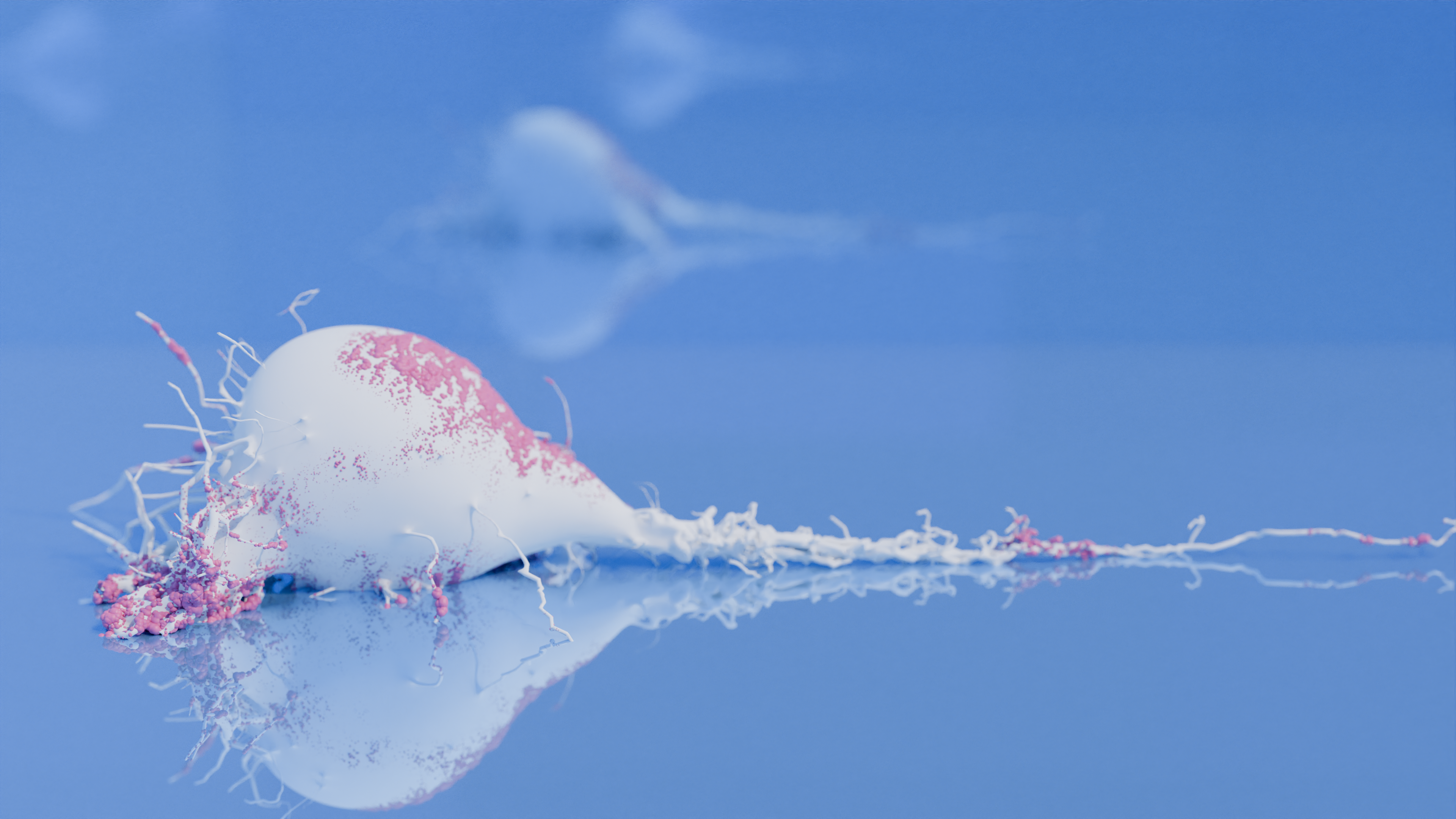
Why Journal Covers Matter More Than Ever
Top journals receive thousands of submissions each year. Your research may be groundbreaking, but the cover is often what gets shared on:
- journal homepages
- conference screens
- press releases
- social media
- institutional newsletters
A professional cover design can:
- attract editorial attention early
- communicate your core discovery instantly
- increase readership and sharing
- boost the perceived importance of your work
- improve the chances of media coverage
Visual storytelling is now a fundamental part of scientific communication — and covers sit at the top of that hierarchy.
What Makes a Strong Journal Cover?
An impactful cover blends artistic clarity with scientific accuracy. Here are the features editors look for:
1. A Clear Visual Hierarchy
The viewer should understand the core idea within seconds. The main subject must be prominent, supported by subtle secondary elements.
2. Accurate Scientific Representation
Artistic freedom is important, but the core molecular structures, mechanisms, or systems must remain scientifically faithful.
3. Balanced Composition
Good covers use:
- contrast
- symmetry or deliberate asymmetry
- color harmony
- guided movement
These ensure the viewer’s eye travels across the composition naturally.
4. Journal-Specific Requirements
Every journal has its own:
- color palette guidelines
- safe zones
- typography rules
- dimensions (portrait, square, landscape)
A professional illustrator ensures compliance so your submission is never rejected for formatting reasons.
What You Should Provide to the Illustrator
To turn your research into art, your illustrator will need:
- The paper’s abstract or main summary
- A simple explanation of the mechanism or process
- Key structures (proteins, molecules, cells, systems)
- Any preferred colors or styles
- The journal’s cover specifications
- Reference images (even rough sketches help)
The goal is to identify the core idea and translate it into a visual metaphor that remains scientifically correct.
My Process for Creating Journal Cover Illustrations
Here’s the streamlined workflow I use when collaborating with researchers:
Step 1 — Understanding Your Science
You share the simplified explanation of your research. I analyze the main conceptual elements and identify story-worthy visuals.
Step 2 — Sketching Concepts
I create 2–3 layout options. Each uses a different metaphor, color mood, or composition.
Step 3 — Refining the Selected Concept
We refine shapes, energy flow, and focal points until everything aligns with your scientific message.
Step 4 — Final High-Resolution Rendering
I produce a polished, cinematic-quality cover in the exact format required by your journal.
Step 5 — Delivery + Tweaks
You receive the final files plus optional variants (social media, abstract graphic, presentation slide).
This ensures your cover is both scientifically meaningful and artistically striking.
Common Mistakes Scientists Make (and How to Avoid Them)
❌ Overloading the cover
Trying to include every molecule or mechanism leads to a chaotic composition.
✔ Instead: Choose one strong central idea.
❌ Using low-quality graphics
PowerPoint icons and 2D clip art are rejected immediately.
✔ Instead: Use custom high-resolution rendering.
❌ Ignoring journal guidelines
Wrong dimension = instant rejection.
✔ Instead: Provide the journal specs early.
❌ Skipping visual storytelling
Science is complex — the cover shouldn’t be.
✔ Instead: Use clarity, symbolism, and flow.
Examples of Effective Visual Strategies
You don’t need to show every detail. Instead, use:
- glowing energy paths to show activation
- color gradients to indicate transitions
- stylized molecule clusters for clarity
- soft depth-of-field rendering for 3D realism
- macro-to-micro transitions to show scale
These techniques transform abstract concepts into intuitive visuals.
What You Receive When Commissioning a Cover
Working with a professional illustrator ensures:
- Fully journal-compliant files
- Custom high-resolution artwork (print + digital)
- Fast turnaround
- Visual clarity that editors instantly understand
- Style consistency for future figures or animations
- A polished, cinematic aesthetic aligned with journals like Nature, Cell, PNAS, and others
For researchers aiming to elevate their work, the cover is not decoration — it is scientific communication at its highest level.
Ready to Begin Your Journal Cover?
If you have a manuscript under review or accepted, now is the perfect time to start the cover development process.
The earlier we define the concept, the more time you’ll have for refinement and journal revisions.
Let’s create something that stands out in the scientific world.